Planetary & Deep Space Exploration
Focuses on current and future missions to the Moon, Mars, and beyond, including human and robotic exploration, resource prospecting, and the development of lunar and Martian economies. Sessions cover mission planning, scientific objectives, and long-term colonization strategies.
Viral Moments
18
Mars landing explained!
Billion-Dollar Moon
Transform Mars' atmosphere!
Lunar Oxygen Price Tag
See space deployment!
Precision on the Red Planet!
Humans beyond Earth!
Rotate orbits in space!
Traditional space is too slow!
Beyond proof-of-concept!
Fueling Martian dreams!
Profit in Space?
Hidden Space Costs
Mars navigation breakthrough!
Oxygen on the Moon?
Complexity of space instruments!
Vision fails on Mars?
Save fuel in space!
Key Quotes
9
“The real legacy of the SSL is not the hardware or the PhD thesis. It's the uncountable number of papers. It's all that intellectual bulk that got developed there that went off and spread all over the industry, not just landing rovers on Mars, but doing startups and all this other innovation.”
“But thermal cameras are robust and when coupled with visible cameras, that gives us a really reliable way on smaller platforms to do this kind of navigation.”
“The biggest thing I've learned while working on Rexus is really that that instruments like this and spacecraft like Osiris Rex are very very complex. There's a lot of dependencies, a lot of requirements, a lot of relationships, a lot of design decisions that all impact one another.”
“Innovation is not a moment or a single invention. But I think as we'll see today... it's a layering of generations of people who work together and build on each other's work.”
“I'd like to argue that lunar ISRU could be a market competitive profitability enabling service.”
“We need to make sure that we have an investment infrastructure in the United States and abroad that supports 14, 18, 21-year type IRRs. Uh or otherwise, we're just going to take great ideas and and and kill them off because we stifle from uh having enough capital early on.”
“But there are a few design paradigms that I think need a little bit more questioning and one of those is the stiffness of the structure.”
“Well, as it turns out, we actually identified that flow rate and pulse frequency actually control the same metric, the number of pulses that the gas sees in the discharge zone. And this is really significant because it means we've identified a reactor performance scaling law that can meaningfully simplify future reactor designs.”
“We showed that we can achieve GPS-like performance at Mars with these types of systems.”
Chapters
16
Articles
9
The 'SpaceTech 2026 Panel: Space Systems Lab: Roots and Branches of Innovation' brought together distinguished alumni to delve into the profound legacy of MIT's Space Systems Laboratory (SSL). Moderated by Ali Dvec, a former PhD student of Dave Miller, the panel explored how the SSL's unique culture of technical ambition, hands-on experimentation, and education through building has shaped generations of students and researchers, propagating innovative ideas across industry, academia, and government.
In the vast expanse of space, where orbital mechanics dictate rapid transitions between blinding sunlight and complete darkness, navigating around unknown objects presents a formidable challenge. Eric Elias, a master's student in aerospace controls, unveiled a groundbreaking solution at SpaceTech 2026: visible-thermal image fusion, a technology poised to revolutionize how we interact with space objects, even when they're shrouded in shadow.
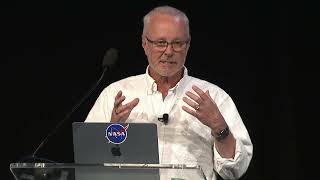
Professor David Miller's keynote at SpaceTech 2026 offered a captivating retrospective on three decades of groundbreaking work at MIT's Space Systems Lab (SSL). From the early days of shuttle experiments to contributing to the James Webb Space Telescope and Mars rover landings, the SSL has consistently pushed the boundaries of aerospace engineering, often with students at the helm.
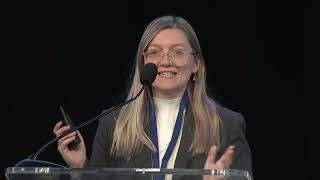
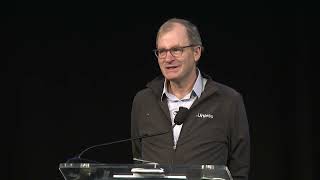
The Space Tech 2026 conference at MIT opened with an electrifying atmosphere, as Professors Julie Shah and David Mindell underscored the current golden age of space exploration and innovation. From humanity's furthest journey yet with Artemis 2 to the pervasive influence of aerospace engineering across diverse industries, the session highlighted MIT's critical role in shaping the future.
The dream of a thriving lunar economy is closer than ever, thanks to advancements in space resource utilization. Ireland Brown, a Draper Scholar and PhD student, unveiled a new cost estimation technique at SpaceTech 2026, demonstrating the profound commercial viability of producing oxygen on the Moon. Her research offers a critical framework for understanding and achieving profitability in future space endeavors.
At the recent SpaceTech 2026 panel, a distinguished group of MIT alumni shared their groundbreaking work and visions for the future of space. From developing high-performance satellite computers to pioneering materials for lunar habitats, these entrepreneurs are not just dreaming big; they're actively building the infrastructure for humanity's expansion into the cosmos.
For decades, the design of space telescopes has largely followed principles established for their ground-based counterparts. However, as Carol Klingler highlights in her compelling lightning talk, this conventional wisdom may be holding back the next generation of space exploration. In a zero-gravity environment, the emphasis on structural stiffness, crucial for Earth-bound observatories, becomes a design constraint rather than a benefit.
As humanity sets its sights on sustained missions to Mars, the challenge of transporting vital resources becomes paramount. Researchers are turning to innovative solutions, with plasma technology emerging as a promising method to transform the Martian environment itself into a source of life-sustaining consumables and rocket fuel.
As humanity sets its sights on deeper and more complex missions to Mars, the need for robust and scalable navigation systems becomes paramount. Current vision-based techniques, while effective for localized operations, falter in degraded environments and lack the global reach required for extensive exploration. This presents a critical challenge that Daniel Gochenaur and his team at the Engineering Systems Lab are addressing with a groundbreaking approach: three-dimensional aero capture.
Sessions
7